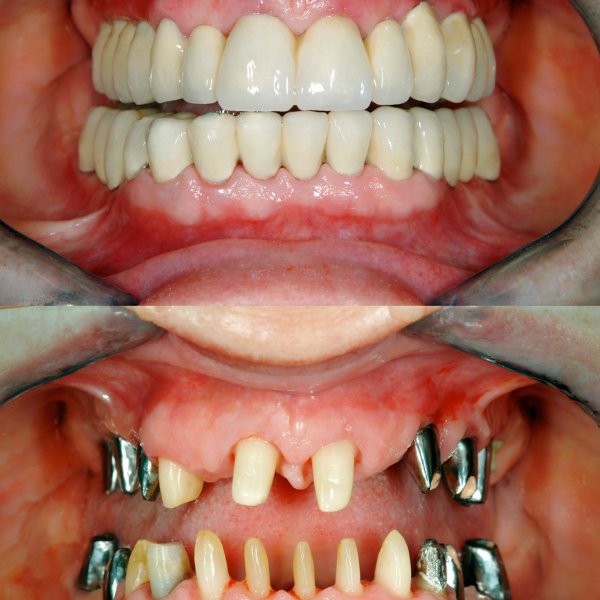
Can Full Mouth Reconstruction Improve Your Bite and Jaw Comfort?
Jaw pain, headaches, and trouble chewing are easy to dismiss. Most people assume it’s stress, poor posture, or just the wear of everyday life. But when those symptoms keep coming back especially alongside worn teeth or a jaw that clicks the real source is often structural. The teeth and jaw aren’t working together the way they should, and over time, that imbalance adds up.
Full mouth reconstruction addresses this at the root. It’s not about cosmetics, though the aesthetic improvements are real. It’s about restoring how the mouth actually functions, the way teeth meet, how pressure gets distributed, and whether the jaw joints are carrying more load than they were designed to handle. When those things are corrected properly, a lot of the discomfort that patients have learned to live with tends to fade along with it.
What Full Mouth Reconstruction Actually Means
Reconstruction is a coordinated treatment plan rather than a single procedure. Depending on what’s going on in the mouth, it might involve crowns, dental implants, veneers, orthodontics, gum therapy, or bite correction, sometimes several of these working together. The key is that everything is planned as a system, not treated in isolation.
What separates this from routine dental work is the diagnostic depth behind it. A good reconstruction starts with a thorough evaluation of how the bite functions, how the jaw moves, and what’s contributing to the breakdown in the first place. Without that foundation, you’re fixing symptoms without addressing the cause.
A Sarasota dentist with experience in full mouth reconstruction will typically assess the bite mechanics, jaw joints, gum health, and overall tooth condition before recommending any specific procedures. The treatment plan comes out of that evaluation not the other way around.
How Bite Alignment Creates Jaw Problems
The bite is essentially a pressure-distribution system. When the upper and lower teeth come together evenly, force spreads across multiple contact points and the jaw muscles do a reasonable amount of work. When the bite is off because of a missing tooth, worn enamel, old dental work, or misalignment certain areas take more impact than they should.
The muscles compensate. The jaw shifts slightly to find a more comfortable position. This works for a while, but the compensation itself creates strain. Over months and years, those overworked muscles produce tension that travels into the temples, the neck, the ears. Patients often don’t connect those symptoms to their bite because the chain of cause and effect isn’t obvious.
Correcting the bite through reconstruction gives those muscles a chance to stop compensating. When pressure is distributed properly again, the jaw can move without fighting against itself. Many patients notice that chronic tension they’d stopped thinking of as a dental problem starts to ease once the underlying structure is addressed.
If you’ve been dealing with symptoms like these, consulting a Sarasota dentist who can evaluate bite mechanics specifically is a useful starting point.
The Connection Between TMJ Disorders and Dental Structure
TMJ disorders are often thought of as a stress problem, and stress is genuinely a factor. But dental structure plays a bigger role than most people realize. Teeth that are worn unevenly, tipped out of position, or missing can put the jaw joints in a position they were never meant to hold for extended periods. That sustained strain irritates the joint and the surrounding muscles, and the symptoms spread from there.
Clicking, popping, difficulty opening the mouth fully, facial soreness, headaches that seem to start near the temples these are all common TMJ-related complaints. Because the jaw joints sit close to major nerves and muscle attachments, irritation in that area rarely stays localized.
Reconstruction addresses the structural side of this equation. Restoring proper tooth contact and bite balance reduces the mechanical strain on the joints, which is often what allows the muscles to finally relax. The relief isn’t always immediate, but it tends to be lasting in a way that symptom management alone isn’t.
Botox for TMJ Relief: How It Fits Into Treatment
One approach that’s increasingly used alongside restorative dental work is Botox for TMJ relief. Most people associate Botox with cosmetic applications, but its ability to temporarily reduce muscle activity makes it genuinely useful in a jaw pain context.
When injected into the masseter muscles the large muscles on either side of the jaw responsible for chewing and clenching Botox reduces the force those muscles can generate. For patients who grind at night or clench during the day, that reduction in muscle activity translates into less tension, fewer headaches, and less pressure on the TMJ joints.
The effects typically last three to six months. It’s not a permanent solution on its own, but used in combination with structural reconstruction, it can make the overall process more manageable. The muscles calm down while the bite correction work is underway, which reduces discomfort during the transition.
Research supports this approach. Studies examining Botox for TMJ relief have found meaningful short-term reductions in jaw muscle pain and headache frequency, particularly in patients with masticatory muscle involvement. For patients whose symptoms are significantly muscle-driven, this can be a valuable addition to the treatment plan.
Clinical evidence around Botox for TMJ relief continues to grow, with several systematic reviews now indicating that botulinum toxin injections can reduce pain intensity and muscle hyperactivity in TMJ patients when used appropriately.
For patients interested in exploring this option further, the Botox for TMJ relief resources provided by the TMJ Association offer a helpful overview of how muscle-targeted treatments fit within a broader TMJ management strategy.
Function Matters as Much as Appearance
Patients often come into a reconstruction consultation focused on how their teeth look. It’s understandable that the visual aspect of a smile is what people notice most consciously. But the patients who tend to be most satisfied with the outcome are the ones who come out the other side realizing how much the functional improvements changed their day-to-day life.
Being able to eat without thinking about which side of the mouth to favor. Not waking up with jaw soreness. Having headaches that used to be a regular occurrence simply stop happening. These aren’t small things, even if they’re harder to photograph than a before-and-after smile.
A qualified Sarasota dentist will design the reconstruction around both goals restoring function and improving aesthetics so that neither comes at the expense of the other. The bite has to work correctly for the cosmetic result to hold up over time anyway, so the two objectives are more intertwined than they might seem.
Why Every Treatment Plan Looks Different
No two mouths have the same history, and no two reconstructions are the same as a result. Someone who lost a tooth years ago and never replaced it has a different set of problems than someone who has ground through significant enamel, or someone whose old dental work has shifted how the bite comes together.
The diagnostic process is what makes personalization possible. Before any treatment begins, imaging, bite analysis, and a careful assessment of how the jaw moves create a picture of what’s actually happening mechanically, not just what looks damaged. That understanding shapes everything that follows.
Some patients need a relatively modest set of procedures. Others benefit from a more involved sequence of treatment combined with supportive therapies like Botox for TMJ relief. The right plan is the one built around that specific patient’s situation, not a template applied to everyone who walks in with jaw discomfort.
What Patients Typically Notice After Treatment
The timeline for reconstruction varies, some cases wrap up in a few months, others take longer depending on the complexity of what’s involved. What patients reliably report once treatment is complete is a kind of relief they didn’t fully anticipate going in.
The headaches that used to be a weekly thing become occasional, then rare. The jaw that used to feel tight in the morning loosens up without the usual effort. Chewing stops being something to manage around and becomes automatic again. Sleep quality often improves, too, for patients whose grinding or clenching had been disrupting rest.
Maintaining those results comes down to consistent care: regular dental visits, good daily hygiene, and a nightguard if grinding is part of the picture. The reconstructed bite, when properly designed, should hold up comfortably for many years.
Worth Having the Conversation
Jaw discomfort and bite-related problems are common enough that a lot of people stop noticing them consciously; they just become background noise. But they’re not inevitable, and they tend to get more complex the longer they go unaddressed.
If you’ve been dealing with persistent tension, headaches that don’t have an obvious source, or teeth that are showing signs of wear, an evaluation is a reasonable next step. The Sarasota dentist directory on Healthgrades is one way to explore providers in the area, or you can contact our office directly to schedule a comprehensive bite and jaw assessment. Understanding what’s actually driving the symptoms is usually the first thing that makes the path forward feel manageable.
About Us
Siesta Village Dentistry is a leading Sarasota dentist practice dedicated to delivering advanced, patient-focused care in a comfortable setting. Specializing in Sarasota laser dentistry and innovative treatments like Sarasota LANAP, the team provides effective solutions for Sarasota Gum disease treatment with minimal discomfort. As a trusted Sarasota Cosmetic dentist, the practice also offers personalized smile enhancements using modern technology. With a strong commitment to quality care, Siesta Village Dentistry ensures every patient receives tailored Sarasota laser dental treatment designed for long-term oral health.